
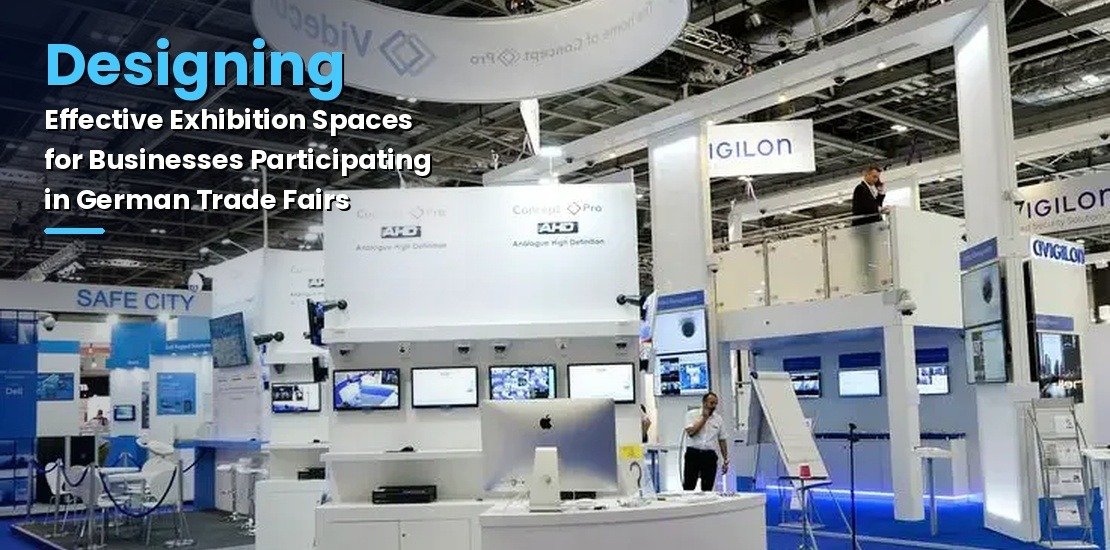
Trade fairs provide businesses with opportunities to introduce products, establish professional relationships, understand market developments, and connect with potential customers. However, participating in an exhibition requires more than booking floor space and preparing promotional materials. Companies must consider how their exhibition environment will communicate their identity, present their products, and accommodate different visitor activities. A well-planned exhibition space combines visual presentation, practical functionality, and effective visitor management to create a productive business environment.
Understanding the Purpose of Exhibition Stand Design
Exhibition stand design involves planning the physical environment in which a company presents its products, services, and brand identity. It includes architectural arrangements, graphics, lighting, furniture, display systems, and visitor circulation.
The first step should be identifying the purpose of participating in an event. Some businesses attend trade fairs to introduce new products, while others focus on generating leads, developing partnerships, or strengthening relationships with existing customers.
These objectives influence the entire design process. A company demonstrating industrial equipment may require demonstration platforms and technical information areas. A software business might need interactive screens, presentation facilities, and private discussion spaces.
Understanding these differences helps businesses avoid unnecessary design elements and concentrate on features that support their exhibition goals.
How Floor Planning Affects Visitor Experience?
The arrangement of an exhibition stand determines how visitors approach, explore, and interact with the displayed products. Even an attractive structure can become ineffective if its layout creates congestion or makes important information difficult to access.
Creating Clear Movement Areas
Visitors should be able to enter and move around a stand without encountering unnecessary obstacles. Open entrances, clearly defined pathways, and strategically positioned displays help maintain comfortable movement.
Companies should also consider how many visitors they expect during busy exhibition periods. Providing sufficient space around demonstration areas and reception counters can prevent overcrowding.
Organising Different Functional Zones
An effective exhibition environment may include several dedicated areas:
- Reception: A welcoming point for initial enquiries and visitor registration.
- Product presentation: Space for displaying products and explaining their features.
- Meeting areas: Comfortable locations for professional discussions.
- Demonstration zones: Areas where visitors can experience products or services.
- Storage: Concealed space for promotional materials, equipment, and personal belongings.
These zones should complement one another while maintaining a consistent visual appearance.
The Role of Brand Identity in Exhibition Environments
An exhibition stand represents a company’s identity in a competitive environment. Colours, typography, graphics, materials, and architectural features should communicate a recognisable brand message.
Consistency is particularly important for businesses exhibiting at several events. When visitors encounter similar visual elements across different exhibitions, they can more easily recognise the organisation.
Companies should avoid excessive messaging and complicated graphics. Instead, the most important information should remain visible from a reasonable distance. Product names, company identity, and key messages should be prioritised over lengthy descriptions.
For businesses planning their participation across different German venues, working with experienced exhibition stand design in Germany professionals can help coordinate creative concepts with construction requirements, transportation, and installation schedules.
Choosing the Right Exhibition Stand Structure
The appropriate stand format depends on available floor space, budget, exhibition frequency, and presentation requirements. Four commonly used solutions serve different purposes.
1. Custom Exhibition Stands
Custom stands are developed around specific business objectives, brand guidelines, and product requirements. They allow greater flexibility in architectural features, display arrangements, graphics, and visitor facilities.
They are particularly suitable for businesses requiring distinctive presentations or specialised product demonstrations.
2. Modular Exhibition Stands
Modular structures use adaptable components that can be rearranged for different exhibition spaces. They are useful for companies participating in multiple events because reusable elements can reduce the need to construct an entirely new stand each time.
3. Double-Decker Exhibition Stands
Double-decker structures provide an additional upper level, creating more functional space within the exhibition footprint. The ground floor can accommodate product displays and visitor interaction, while the upper level may be used for meetings and hospitality.
Such structures require appropriate engineering, technical planning, and venue approval.
4. Country Pavilion Exhibition Stands
Country pavilions bring multiple exhibitors together within a coordinated presentation. Each participant can maintain an individual identity while contributing to a larger national or regional exhibition environment.
These structures are particularly relevant to trade associations, government-supported delegations, and groups of businesses representing the same country.
What Makes Exhibition Projects Different Across German Cities?
Germany has several major exhibition destinations, each hosting events associated with different industries. Consequently, exhibition planning should consider the location, venue specifications, event regulations, and audience expectations.
Berlin hosts exhibitions covering technology, consumer industries, tourism, and business innovation. Frankfurt is an important destination for commercial, financial, and industrial events. Hannover is widely associated with engineering and manufacturing, while Munich attracts exhibitions involving technology, mobility, and various professional sectors.
Cologne also has an established exhibition environment, with events covering food, furniture, interiors, photography, and other industries.
The requirements of individual venues can differ considerably. Stand height restrictions, technical connections, loading arrangements, construction schedules, and safety regulations should therefore be reviewed before finalising a design.
Businesses exhibiting in Cologne can also explore local planning considerations through exhibition stand contractors in Cologne, particularly when evaluating stand construction, venue coordination, and installation requirements.
From Initial Briefing to Final Installation
An exhibition stand involves several connected stages. Understanding this process helps businesses prepare information and make decisions at the appropriate time.
Briefing and consultation: The process begins with information about the company, exhibition objectives, products, floor dimensions, budget, and expected audience.
Three-dimensional design: Designers develop visual concepts that allow exhibitors to review the proposed structure, branding, and functional arrangements before production.
Production and preparation: Once the design is approved, construction begins. Materials, graphics, structural components, and technical elements are prepared according to the project specifications.
Packaging and transportation: Components are organised and protected for delivery to the exhibition venue.
Installation and supervision: The stand is assembled according to the approved design and venue requirements. On-site coordination helps address practical issues before the exhibition opens.
Dismantling and storage: Following the event, the structure is dismantled. Suitable components can be stored for future use, depending on their condition and design.
Stand Builders GmbH follows an integrated approach covering design, production, packaging, dispatch, installation, on-site supervision, dismantling, and storage. Its four principal stand categories address different exhibition requirements.
Frequently Asked Questions
1. What factors should businesses consider before designing an exhibition stand?
Businesses should establish their exhibition objectives, available budget, floor dimensions, target audience, product requirements, and venue regulations before beginning the design process.
2. Are modular exhibition stands suitable for repeated events?
Yes. Modular stands use adaptable components that can be reconfigured for different floor spaces. They are particularly useful for businesses participating in several exhibitions throughout the year.
3. What is the difference between custom and modular exhibition stands?
Custom stands are developed around specific design and branding requirements, whereas modular stands use reusable components that can be rearranged into different configurations.
4. Why is three-dimensional visualisation important?
Three-dimensional visualisation helps exhibitors understand the proposed layout before production. It allows them to review display positions, branding, meeting areas, and visitor movement.
5. When should exhibition stand planning begin?
Planning should begin several months before the event whenever possible. Early preparation allows sufficient time for design approvals, production, technical checks, transportation, and installation arrangements.
Conclusion
Effective exhibition stand planning requires a combination of creative thinking, technical knowledge, and practical organisation. Businesses should consider their objectives, visitor requirements, available space, and venue regulations before selecting a suitable structure. Whether the requirement involves a custom presentation, reusable modular system, double-decker arrangement, or coordinated country pavilion, every design decision should serve a clear purpose. Careful preparation and a well-coordinated construction process can help exhibitors create functional environments that support communication, professional networking, and meaningful business opportunities at trade fairs.